Yes. On an object that lies still, gravity acts in any case: the Earth pulls on it. A phone on a table does not fall because the table pushes it up just as hard. Those two forces cancel each other out. You name a force after where it comes from: muscular force, elastic force, magnetic force, friction and gravity.
This video can also be listened to in العربية, English, Français and Türkçe. Choose your language under the gear icon in the player, at Audio track and Subtitles.
You squash a tennis ball flat in your hand and then you throw it away. Both with your muscles, and yet the ball does two very different things.
First you see what a force can do: change the shape of an object, or its motion, faster, slower or in a different direction. Sometimes both at once, like a racket that dents the ball and hits it back. You never see a force itself, only what it does, and you measure it in newtons. Then the five types of forces, named after where they come from: muscular force, elastic force, magnetic force, friction and gravity. Finally a phone lying still on a table, and why two forces still act on it that cancel each other out.
For high school physics, in the chapter on forces. Halfway through there is a question and a pause: stop the video there and think for yourself first.
In this video
The full explanation, in writing
The same hand, twice
0:00You squash a tennis ball flat in your hand. Then you throw it away. Both with your muscles, and yet the ball does two very different things.
What a force does
0:14A force can do two things. It can change the shape of an object, like your fingers squashing the ball. And it can change the motion: something speeds up, slows down, or changes direction. Sometimes one force does both, like a racket that dents the ball and hits it back.
0:34You never see a force itself, you only see what it does. You measure a force in newtons, and its symbol is the capital letter N.
Five types of forces
0:43Which force it is, you say by naming where it comes from. Muscular force comes from your muscles. Elastic force comes from something squashed or stretched that wants to go back, like a rubber band or a trampoline. Magnetic force acts between a magnet and iron, even when they do not touch.
1:03Friction works against motion, between your shoe soles and the floor, or between the air and a cyclist. And gravity is the force with which the Earth pulls on every object, always, even when it lies still. Your turn. A phone lies still on a table.
1:21Which force acts on that phone in any case?
Still, and yet forces
1:28Gravity. The Earth pulls on the phone, even when it lies still. Yet the phone does not fall, because the table holds it back: the table pushes the phone up, just as hard as the Earth pulls it down. Two forces that cancel each other out, and so nothing changes about the motion.
1:50Lying still doesn't mean no force acts.
Three things to remember
1:52Three things. A force can change the shape of an object, or its motion: faster, slower, or a different direction. You measure a force in newtons. You name a force after where it comes from: muscular force, elastic force, magnetic force, friction and gravity.
2:10And gravity always acts, even on an object that lies still.
Two questions
2:14Two questions. One. You stretch a rubber band and let it go against a paper ball. Which two forces act here, one after the other? Two. A cyclist stops pedalling and slowly rolls to a stop. Which force changes his motion?
The answers
2:34The first: first muscular force, with which you stretch the rubber band. Then elastic force, with which the rubber band shoots the paper ball away. The second: friction, from the road and from the air. It works against the motion, and so the cyclist slows down.
Next: gravity
2:50Do you want to know how to calculate how big the force of gravity on something is, and how to draw a force as an arrow? Then watch the video about gravity and the force scale on my YouTube channel.
Frequently asked questions
What can a force do?
A force can do two things. It can change the shape of an object, like your fingers squashing a tennis ball. And it can change the motion: something speeds up, slows down, or changes direction. Sometimes one force does both, like a racket that dents the ball and hits it back.
What types of forces are there?
You name a force after where it comes from. Muscular force comes from your muscles. Elastic force comes from something that has been squashed or stretched and wants to go back. Magnetic force acts between a magnet and iron, even when they do not touch. Friction works against motion. Gravity is the force with which the Earth pulls on every object.
What unit do you measure a force in?
In newtons, with the capital letter N as its symbol. You never see a force itself, you only see what it does: an object that changes shape or starts moving differently.
Why does a phone on a table not fall if gravity is pulling on it?
Because the table pushes the phone up just as hard as the Earth pulls it down. Those two forces cancel each other out, and then nothing changes about the motion. So lying still does not mean that no force is acting.
Which forces act when you shoot a paper ball away with a rubber band?
First muscular force, with which you stretch the rubber band. Then elastic force, with which the rubber band wants to go back and shoots the paper ball away.
Why does a cyclist roll to a stop when he stops pedalling?
Because of friction, from the road and from the air. It works against the motion, so the cyclist slows down until he stands still.
Lying still does not mean that no force is acting.
Physics with Thomas makes physics explainers for secondary school. No words on screen, so what you see works in any language.
In this series
 Types of forces3:06
 Calculating gravity3:15
 Centre of gravity2:48
 Force meter: range and precision3:11
 Elastic force and spring constant3:41
 Directly proportional relationship3:37
About me





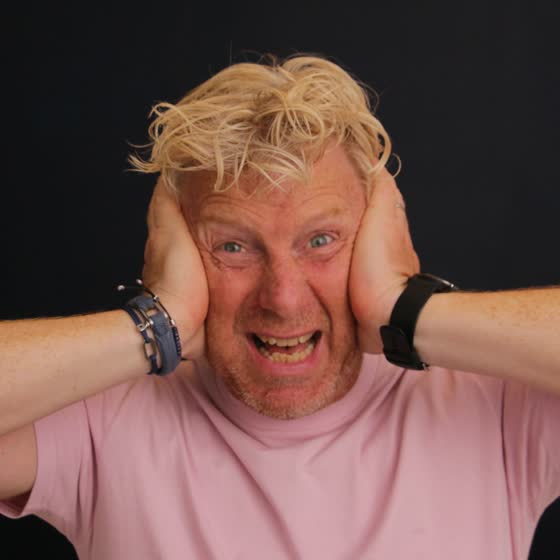




My name is Thomas Schuurmans, and I have a passion for physics and for understanding why things work the way they do. What I want is to get young people asking “why is that?” and “how does that work?” more often, and to hand them the tools of physics in a way that is simple and that you can see.
I graduated in applied physics at Delft University of Technology in 2003. After that I spent more than twenty years outside education: first at TNO, the Dutch applied research institute, then at a design agency, and eventually founding Proportion Global, through which I work on innovation questions in Africa, Latin America and South Asia. That work resembles physics more than you would expect: don't start from a solution, first understand what is going on, try something, be wrong, and look again.
Since 2026 I have been teaching physics to both lower and upper secondary classes, and I started a master's at the University of Amsterdam for my full teaching qualification. That is where I learned that a secondary school pupil's real attention for new material lasts about seven minutes. And my own weakness happens to be telling too many side stories.
That is where the idea came from: videos that explain one topic sharply and visually, inside those seven minutes. I make them for my own pupils. Then I publish them, because good explanation should be within reach of anyone who needs it, wherever you live and whatever language you think and speak in.